A bit of context before we chat. You want to grow. But are you ready?
You've applied, so something's probably not sitting right with how growth is going. This is about forty minutes on what we tend to find in health ad accounts, how we think about measuring it, and how we'd work together. Worth a watch before our call — it means we can skip the basics and get into your actual situation.
Most people who reach out mention one of these.
Spend is flat or up, and revenue is quietly down on last year
Ads keep getting rejected and nobody can quite explain why
There are winners sitting in the account that never got scaled
Every platform reports a different number and it's hard to know which to trust
New customers have dropped off while the existing base looks fine
It's got difficult to tell whether it's the ads or the offer
Any one of these on its own is usually a small fix.
Together they tend to point at something more structural — which is a different conversation, and the one we're better at having.
Sign-ups up 20%. Revenue down 17%.
One of Australia's fastest-growing health brands came to us with revenue sliding and no real sense of why. Spend was flat year on year, and their headline number was actually going up.
What was happening: they'd been optimising toward free trial sign-ups — which turned out to be the one journey that didn't make them money.
Then Apple takes 32%, so that $87 is really $59 against $85 to acquire. In their worst month acquisition hit $132.
Nobody had done anything wrong — marketing was hitting exactly the number it had been given. The number just wasn't the right one. We found it in a Growth Diagnostic, which is where we start with everyone.
ROAS isn't really a return.
It's one platform's estimate of its own contribution, on its own window, measured against the revenue it happens to be able to see. Useful — just not what most people think it is.
Chase the cheapest conversion event, whatever it's actually worth
Cut upper funnel, because it looks unprofitable
Cut brand and content, because they attribute to nothing
Scale whichever campaign the platform happens to flatter
That same brand had its best media month of the year and still lost money on every monthly subscriber it picked up.
The ad account said good month. The economics said otherwise.
Fractional acquisition leaders. Not another agency retainer.
We're a team of operators who work inside health, wellbeing and longevity businesses — the seats you'd otherwise have to hire, without having to hire them. There are three usual ways to get this done, and they each run into something.
A person you know
Three to six months and a salary before you really know if it's working. And when they move on, most of what they learned goes with them.
Someone good, quickly
Often genuinely great operators. But they arrive with their own way of doing things, you're still the one managing them, and their involvement ends where yours begins.
A method
There's a system behind it, which helps. You just rarely meet whoever's actually in your account, and your category's quirks get learned on your spend.
A seat, plus the category
Someone named in your Slack every day, running a system that's written down so it survives them changing. Health-category trained before they touch anything.
Here's the bit that doesn't get said much: a really good marketer, dropped into a business that doesn't know how to direct them, won't produce much — and in that setup nobody's really accountable for it.
The placement was the product. Whether it worked was nobody's job. That's the gap we're trying to close — and the way we close it is by taking ownership of specific parts of the engine, in writing, rather than selling you hours.
Every engine runs on three loops. The only question is who's turning each one.
Most engagements never name these — which is exactly why, when things go quiet, the conversation goes in circles. Three different problems wearing the same symptom, and no agreed map of who was holding what.
The growth loop
The weekly rhythm you're in — the pulse lands, the call turns it into decisions, Slack carries the work between them, and it repeats on the same days every week.
The media loop
What gets spent, where, on what — and what happens when the numbers move. Budgets, account structure, what launches, what scales, what gets killed and when.
The creative loop
What gets said, to whom, and in what form. The research, the angle, the script, the asset — and what replaces it when it stops working, which it will.
We structure engagements so that when something stalls, it has an owner.
Each step up doesn't hand you more deliverables. It hands us another loop — and takes one more excuse off the table. The entry tier is the exception: there you keep the loops and we run the growth one alongside you.
The plain version.
Health, wellbeing and longevity — physical or mental. A proven offer with customers already paying. Australia, US, UK or Canada. Which one fits comes out of the Growth Diagnostic, not off a page.
Nothing comes off the table here — you own the engine, and its results.
Off the table: "your media buying is the problem."
Off the table: "your creative isn't good enough."
Off the table: "your strategy is wrong."

Every account gets a named person, a written system, and someone senior looking at the numbers behind it.
You're all set.
If you can, bring your last three months of spend and results, and a rough sense of what a customer is worth to you. If that second one's fuzzy, no problem at all — it's really common, and it's usually one of the first things we work out together.
Not booked yet?
Thirty minutes. We'll look at your economics, your offer and your message, and I'll tell you what I'm seeing and whether a full Growth Diagnostic is worth doing.
Six founders, same category.
Health, wellbeing and fitness businesses we've worked with. Worth a few minutes if you want to hear it from someone other than me.
Breathwork facilitator certification. Biggest month was $18,000 — eighteen months on it's $330,000.
Women's health and fitness coaching, launched from nothing. On track for $4M in year one.
Mental health and relationships — one of the trickiest categories to advertise in.
Matt on what changed once the system was in place.
Found us on LinkedIn in 2022. We didn't run a campaign for a long time — when they were ready, they came straight to us.
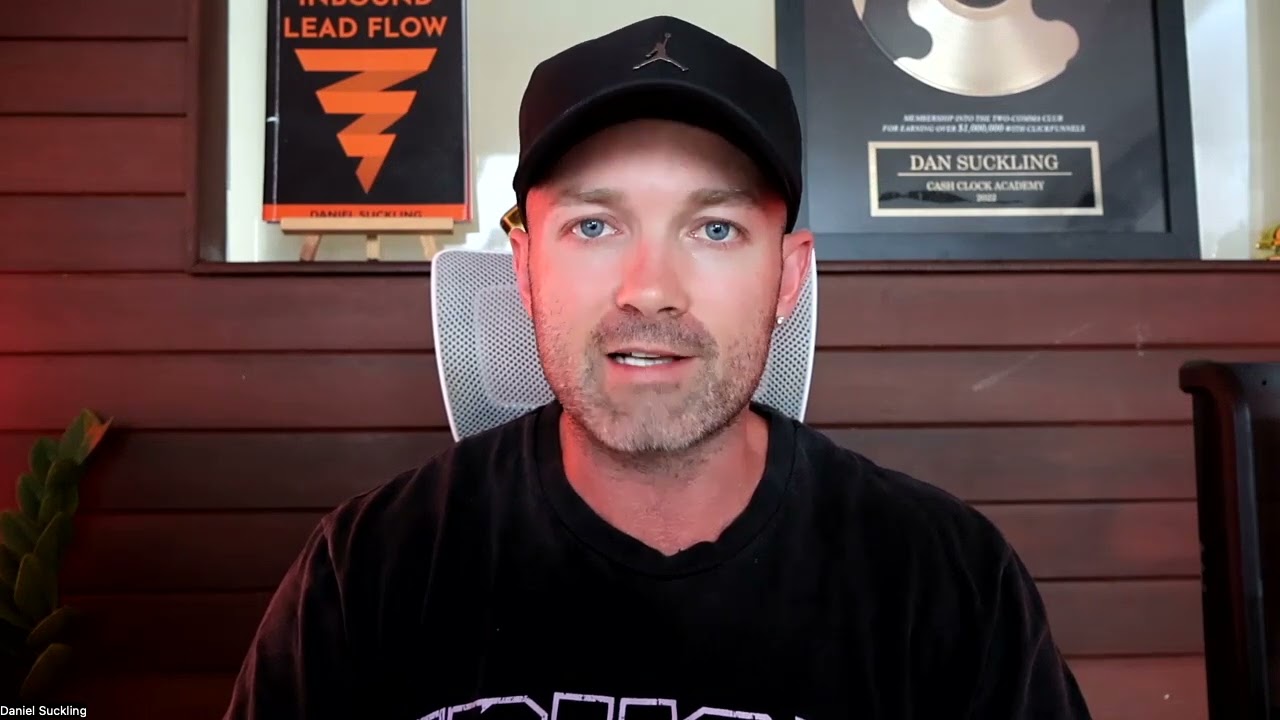
Business mentor to fitness coaches. Built a seven-figure operation without a traditional sales team.
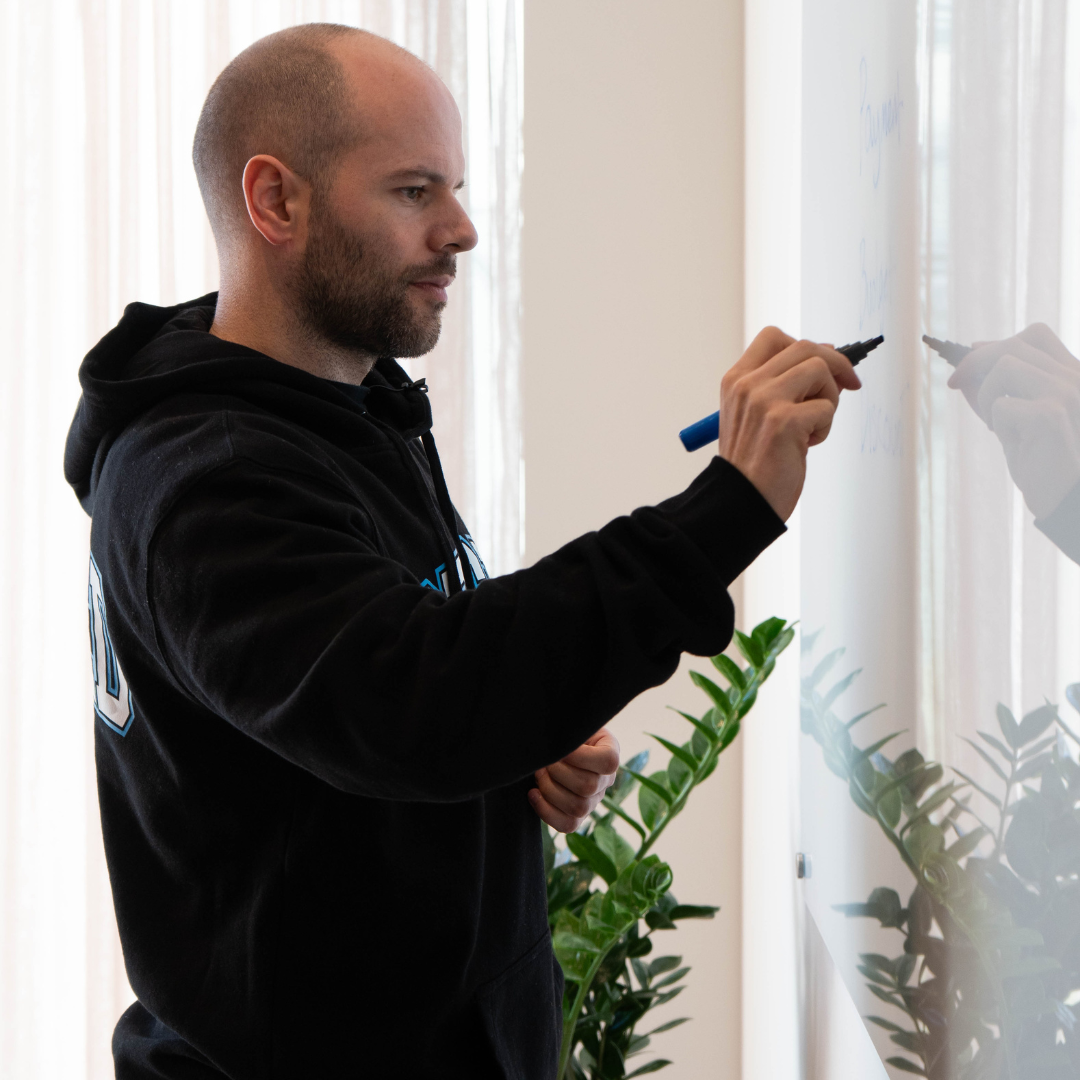
We map the economics first — what a customer is worth, what one can cost, and where the path from click to customer is leaking.
Worth answering up front.
We read results over days 31 to 120, against your own baseline. The first month is build and learning — anything that claims a verdict inside two weeks is measuring noise. What you will see from week one is the rhythm: the pulse every Tuesday, decisions in writing, and a plan that doesn't slip.
A 30-day window at the start where either of us can walk, then month-to-month — with a 12-month commitment available that reduces the retainer, which we'll cover on the call. The entry tier runs a 90-day minimum, because that's the shortest window a result can honestly be read in. No lock-ins beyond what the measurement itself needs.
So had most of the people on this page. It's usually less about effort or talent, and more that nobody handed over a structure you could actually see, a number you could trust, or a person you could direct.
Whichever loops we've taken. At Level 1 that's the media loop and the growth loop — the build, the diagnosis, the compliance, the decisions on what runs. You keep the creative loop, the offer and the sales process. Both halves show up in your reporting each month, so nobody has to guess whose problem a bad month was.
No, and I'd be wary of anyone who does. What we can do is be specific about what we own, put it in writing, and report against it. That's what the loops are for.
If there's something else on your mind, bring it to the call — much easier to talk through than sit on.
How we try to de-risk this.
We don't do a money-back guarantee. What we do instead is try not to take on accounts we don't think we can move.
You see the account, the structure, the numbers and the thinking behind them. Nothing hidden in a dashboard you can't get into.
Ad spend goes on your own card, straight to Meta. We never hold it, front it or recharge it.
Which loops are ours and which stay yours is agreed before we start, and it's what your monthly reporting is built around.
If we take you on it's because we think we can move the number. If we don't, we'll tell you why.
Thirty minutes, three things.
Your economics, your offer, your message. No pressure and no pitch — and if it's not a fit, I'll say so.